

Focus & Productivity Optimisation — At a Glance
| What this covers | Building a personal focus system from the mechanisms up — caffeine timing, the L-theanine and caffeine stack, ultradian work blocks, environment design, nutrition timing and a structured afternoon reset. |
| Best-evidenced intervention | The L-theanine and caffeine combination is the most consistently supported focus stack in controlled trials, improving speed and accuracy on attention-switching tasks beyond either compound alone (Owen et al., 2008). |
| Key finding | In a 27-person crossover trial, 100mg L-theanine with 50mg caffeine improved both speed and accuracy on an attention-switching task and reduced susceptibility to distraction at 60 and 90 minutes (Owen et al., 2008). |
| Most impactful single variable | Caffeine timing, not caffeine dose. Delaying the first dose 90–120 minutes after waking, and stopping by early afternoon, does more for sustained focus than any increase in amount. |
| Critical caveat | No focus stack compensates for inadequate sleep. Objective performance degrades under sleep restriction even when your subjective sense of alertness does not (Van Dongen et al., 2003). |
| Biggest mistake to avoid | Reaching for more caffeine to fight the mid-afternoon dip. It is largely circadian, and afternoon caffeine degrades that night’s sleep, which deepens the following day’s dip. |
Educational information only. This guide is not medical advice and does not diagnose or treat any condition. Persistent focus problems can have medical causes worth investigating with a professional. Consult a qualified healthcare provider before starting any supplement, particularly if you have a pre-existing condition, are pregnant, or take prescription medication.
Focus & Productivity Optimisation
Most focus advice is a list of habits with no mechanism behind it — drink water, take breaks, turn off notifications. The habits are fine. The problem is that without understanding why each one works, you can’t adapt them when they stop working, and you can’t tell the genuinely useful interventions from the ones that just sound productive.
This guide takes the opposite approach. Focus is a physiological state governed by neurotransmitter availability, circadian and ultradian rhythms, blood glucose stability and hydration. Once you understand the biology, the practical protocols stop being arbitrary rules and become things you can reason about and tune to yourself. In 18+ years of testing cognitive interventions on myself — tracked against 26 months of continuous Oura data — the systems that survived are the ones grounded in mechanism, not the ones that merely felt productive.
A word of honesty before we start: the single most reliable determinant of your focus tomorrow is how you slept last night, and no amount of clever protocol design changes that. If your sleep is broken, start with sleep and recovery before anything here. Everything below assumes a reasonable sleep foundation is already in place.
Start Here
Four routes through this material depending on where you are. Pick the one that matches your situation.
Level 01 · Complete beginner
Start with caffeine timing (Concept 02). It costs nothing, requires no supplement, and for most people produces the largest single improvement. Fix that before adding anything.
Level 02 · Ready to supplement
Add the L-theanine and caffeine stack (Concept 01). It is the best-evidenced, lowest-risk entry point into focus supplementation.
Level 03 · Structuring your day
Move to the 90-minute focus protocol (Concept 03) and environment design (Concept 04). This is where the largest gains live once the chemistry is handled.
Level 04 · Fine-tuning
Nutrition timing (Concept 05) and the afternoon reset (Concept 06) are the last few percent. Worth doing once the foundations are consistent, not before.
Key Research Statistics
Four findings that shape the protocols below. Each is drawn from peer-reviewed human research and cited in full at the foot of the page.
100 / 50 mg
The L-theanine and caffeine doses that improved both speed and accuracy on an attention-switching task, and cut susceptibility to distraction, in a placebo-controlled crossover.
Owen et al., 2008, Nutritional Neuroscience, n=27
~90 min
The approximate length of the ultradian cycles that govern alertness across the working day, first described in the basic rest–activity cycle literature and the basis of the focus-block protocol.
Kleitman, basic rest–activity cycle
>2%
Body-mass water loss above which a meta-analysis of 33 studies found the clearest impairment of attention and executive function. Below that level, effects were small.
Wittbrodt & Millard-Stafford, 2018, meta-analysis
14 days
How long restricted sleep took to degrade objective performance cumulatively — while participants’ own sense of sleepiness plateaued and stopped tracking their actual decline.
Van Dongen et al., 2003, Sleep, n=48
Six Concepts Behind a Focus System
From the chemistry of a single dose to the rhythm of a whole day — the mechanisms that make each protocol work.
The L-Theanine and Caffeine Stack
This is the most consistently supported focus stack in the literature, and it is available to anyone who drinks coffee. In a placebo-controlled crossover, Owen and colleagues (2008) found that 100mg of L-theanine with 50mg of caffeine improved both speed and accuracy on an attention-switching task and reduced susceptibility to distraction in a memory task, at both 60 and 90 minutes after dosing. A separate double-blind trial by Haskell and colleagues (2008) reported similar attention benefits from the combination.
The mechanism is complementary rather than additive: caffeine blocks adenosine receptors, reducing the perception of fatigue, while L-theanine promotes alpha-band activity associated with relaxed, engaged attention — which appears to take the edge off caffeine’s jitter. Start with roughly 100mg L-theanine to 50–100mg caffeine and adjust from there. The full mechanics, ratios and timing are covered in the dedicated L-theanine and caffeine stack guide. This should be your first focus experiment before anything more complex.
Strategic Caffeine Timing
Caffeine timing is arguably more important than dose, and it is where most people leave the biggest gains on the table. Cortisol rises naturally in the first 30–45 minutes after waking, and taking caffeine straight into that peak tends to blunt its perceived benefit while nudging you toward tolerance. The more consequential issue is at the other end of the day: caffeine has a half-life of roughly five to seven hours, so an afternoon cup is still meaningfully present at bedtime.
The protocol: delay your first caffeine to about 90–120 minutes after waking, and stop by early afternoon. For most people this smooths out the day’s energy and protects that night’s sleep architecture, which in turn shrinks the following afternoon’s dip. It is a small change that tends to pay back more than any increase in dose.
The 90-Minute Focus Protocol
Alertness is not flat across the day. It moves in ultradian cycles of roughly 90 minutes — the waking counterpart of the basic rest–activity cycle first described by Nathaniel Kleitman. Working in alignment with that rhythm, rather than grinding straight through it, tends to produce better sustained output than any scheduling system that treats attention as a constant resource you can simply will into being.
The protocol: work in focused blocks of up to about 90 minutes, then take a genuine 10–15 minute break — stand, move, look at something distant, hydrate, disengage completely. This is the same principle that underpins serious deep work practice, and the break is not optional — it is what prevents the fatigue accumulation that hollows out your afternoon.
Environmental Design for Deep Work
External distractions are the easy half of the problem. Internal distractions — intrusive thoughts, unresolved open loops, the low background hum of an unstructured environment — are harder to defeat with willpower and do more damage to sustained concentration. Good environment design addresses both, so that focus doesn’t depend on a finite supply of self-control. This matters most in an open-plan office, where you control less of your surroundings; the practical tactics for focusing in a busy workplace are worth a dedicated read.
In practice: a cleared workspace with the phone physically out of the room, a single task on screen, brown noise or silence for demanding work, and a temperature on the cooler side of comfortable. Keep a notepad beside you and write down intrusive thoughts the moment they surface, then return to the task — capturing an open loop closes it far more reliably than trying to ignore it. Managing the constant pull of devices is its own discipline, covered in digital distraction and the brain.
Nutrition Timing for Sustained Energy
Blood-glucose stability underpins attentional stability. A large, refined-carbohydrate meal spikes glucose and insulin together and is often followed by a reactive dip that reads, from the inside, as an afternoon of fog. The usual response is more caffeine, when the more direct fix is meal composition — and hydration, since attention is one of the domains most reliably affected once fluid loss becomes non-trivial.
In practice: a protein-forward breakfast with minimal refined carbohydrate, a moderate lunch balancing complex carbohydrate, protein and fat, and your largest meal timed after your most demanding cognitive work rather than before it. Keep water in front of you — a meta-analysis of 33 studies found that dehydration impairs attention and executive function, with the clearest effects once water loss exceeds about 2% of body mass.
The Afternoon Reset Technique
The 2–3pm dip is largely physiological — a genuine circadian trough overlaid with accumulated adenosine and, often, post-lunch glucose dynamics. Meeting it with another coffee tends to backfire: afternoon caffeine degrades that night’s sleep, which makes the next day’s trough deeper. The more effective response works with the circadian system rather than overriding it.
The protocol: a 10-minute walk outside (daylight is the strongest circadian signal available to you), a couple of minutes of slow breathing, a glass of water, and a small protein-forward snack if you’re genuinely hungry. If you use the theanine-and-caffeine stack, a small theanine-only dose can give calm alertness without the late-day caffeine load. For readers who run stressful, fatiguing schedules, it’s worth noting that a trial of Rhodiola rosea in people with stress-related fatigue found improvements in concentration and a reduced cortisol response to waking stress — though that was a clinical fatigue population, not healthy adults chasing an afternoon lift, and it did not compare Rhodiola against caffeine.
Focus Interventions Ranked by Evidence
An honest grading. Behavioural interventions and the theanine–caffeine stack are the best supported; several popular additions rest on thinner evidence than their reputation suggests.
| Intervention | Evidence | Primary benefit |
|---|---|---|
| Adequate sleep | 🟢 Highest evidence | The precondition for all sustained attention; nothing compensates for its absence |
| L-theanine + caffeine | 🟢 Strong human RCTs | Attention-switching speed and accuracy; reduced distraction |
| Caffeine timing / hydration | 🟢 Strong mechanistic + RCT | Stable energy; protection of night-time sleep |
| Ultradian work blocks | 🟡 Moderate evidence | Sustained output; reduced fatigue accumulation |
| Rhodiola rosea | 🟡 Moderate (fatigue populations) | Concentration under stress-related fatigue; not shown vs. caffeine |
| Brown noise / soundscapes | 🔴 Preliminary / individual | Masking of variable environmental noise; highly person-dependent |
The NeuroEdge Focused Day Protocol
One day, assembled from the six concepts. Adjust clock times to your own wake time — the sequence matters more than the exact hour.
On waking
Delay, hydrate, light
No caffeine yet. A large glass of water to reverse overnight fluid loss, and a few minutes of outdoor daylight to anchor the circadian clock. Let cortisol do its natural job first.
~90–120 min after waking
First focus block
Now the first caffeine, ideally as the theanine–caffeine stack (~100mg theanine to 50–100mg caffeine). Begin a focused block of up to 90 minutes on your hardest task, phone out of the room.
Midday
Break, move, eat second
Full 10–15 minute breaks between blocks. Moderate, balanced lunch — not the day’s largest meal. Last caffeine of the day by early afternoon to protect tonight’s sleep.
2–3pm dip
Reset, don’t re-dose
Walk outside, water, slow breathing, optional theanine-only. Then a final block for lighter, less cognitively demanding work. Largest meal after the demanding work is done.
Peter’s Testing Notes
Of everything on this page, caffeine timing was the one that surprised me most, because it costs nothing and I resisted it for years. I was a straight-out-of-bed coffee drinker for most of my adult life. When I finally pushed my first cup to roughly two hours after my 06:00 wake time and held it there for a month, the change that showed up in my Oura data wasn’t in the mornings — it was in my afternoons and my sleep-onset latency. The 3pm collapse I’d assumed was just my constitution softened noticeably, and it tracked with falling asleep faster at night.
The theanine–caffeine stack I’ve used for years, currently around 200mg L-theanine to 100mg caffeine on demanding mornings. The effect is real but subtle — it’s the absence of jitter and the slightly longer runway before distractibility sets in, not a dramatic surge. Anyone expecting a stimulant high will be underwhelmed, and that’s rather the point.
The 90-minute blocks are the intervention I’m least consistent with, and I’ll be honest about that. On a good day they’re transformative; on a meeting-heavy day they’re aspirational at best. What I’ve settled into is protecting one true 90-minute block first thing rather than pretending I can run four of them. One protected block beats four theoretical ones.
The honest caveat on all of it: in the weeks my sleep slipped — travel, a stretch of short nights — none of these techniques held the line. The stack didn’t rescue a badly slept day, the blocks fell apart, and the afternoon reset became a walk that just delayed the inevitable. That’s the whole reason this guide opens by pointing you at sleep first.
Updated July 2026.
How the System Applies — Three Illustrative Scenarios
These are illustrative examples, not real individuals or testimonials. They show how the concepts on this page combine for common working patterns. They are composite scenarios for explanation only and do not represent guaranteed or typical results — individual responses vary.
The knowledge worker fighting a 3pm wall
A common pattern: strong mornings, a hard crash after lunch, and a fourth coffee that fixes the afternoon but wrecks that night’s sleep — deepening the next day’s crash. The system attacks the loop at both ends: move the first coffee later and cut off the last one by early afternoon, then replace the 3pm re-dose with a daylight walk and water. The point isn’t to eliminate the dip — it’s circadian and largely won’t be eliminated — but to stop feeding the cycle that makes it worse each day.
The student who can’t settle into study
Another familiar pattern: long study sessions that dissolve into phone-checking within twenty minutes. Here the leverage is environmental and structural rather than chemical — phone physically out of the room, a single ~90-minute block with one clear task, and a real break afterwards rather than a slow slide from work into scrolling. The theanine–caffeine stack can help, but only after the environment problem is solved; a stack won’t hold attention that an open phone is actively pulling away.
The founder running on stress and short nights
The hardest case, because the foundation is broken. When sleep is the bottleneck, no focus protocol on this page will hold — that’s exactly what Peter’s testing notes describe. The honest sequence is to fix sleep first, and only then layer in caffeine timing and work blocks. Reaching for a stronger stack to paper over chronic short sleep is the single most common mistake in this whole field, and it doesn’t work.
Key Takeaways
Sleep is the foundation. Under restriction, objective performance declines even when your sense of alertness doesn’t — so no focus stack compensates for poor sleep.
Caffeine timing beats caffeine dose: delay the first cup 90–120 minutes after waking and stop by early afternoon.
The L-theanine and caffeine stack is the best-evidenced focus supplement, improving attention-switching and cutting distraction in controlled trials — a subtle, jitter-free effect, not a surge.
Work with your ~90-minute ultradian rhythm in focused blocks and take genuine breaks; one protected block beats four theoretical ones.
Meet the afternoon dip with daylight, movement and water rather than more caffeine — re-dosing late trades a short lift for a worse night and a worse tomorrow.
Focus & Productivity — FAQ
What is the single most effective thing I can do to improve focus?
Protect your sleep first, then fix your caffeine timing. Sleep is the strongest determinant of next-day attention: in controlled sleep-restriction research, objective performance declined cumulatively even as participants’ own sense of sleepiness levelled off and stopped tracking their real decline. Once sleep is adequate, the highest-value zero-cost change is delaying your first caffeine to about 90–120 minutes after waking and stopping by early afternoon. That single adjustment tends to steady the day’s energy and improve that night’s sleep more than any increase in dose.
Does the L-theanine and caffeine stack actually work?
Yes, with realistic expectations. In a placebo-controlled crossover trial, 100mg of L-theanine with 50mg of caffeine improved both speed and accuracy on an attention-switching task and reduced susceptibility to distraction at 60 and 90 minutes after dosing, and a separate double-blind study found comparable attention benefits. The effect is best understood as smoother, more sustained focus with less of caffeine’s jitter — not a dramatic stimulant surge. A common starting point is roughly 100mg L-theanine to 50–100mg caffeine, adjusted to preference.
Why do I crash every afternoon, and how do I stop it?
The mid-afternoon dip is largely a circadian trough, overlaid with accumulated adenosine and, often, the glucose swing from a heavy lunch. It is partly built into your biology, so the goal is to soften it rather than eliminate it. Reaching for more caffeine tends to backfire, because afternoon caffeine has a five-to-seven-hour half-life and degrades that night’s sleep, which makes the next day’s dip deeper. A more effective reset is a 10-minute daylight walk, a glass of water, a few minutes of slow breathing, and a lighter, protein-forward meal earlier in the day.
How long should a focused work block be?
Up to about 90 minutes, followed by a genuine 10–15 minute break. This aligns with the ultradian rhythm — roughly 90-minute cycles of alertness across the day, the waking counterpart of the basic rest–activity cycle. The break matters as much as the block: standing, moving, looking at something distant and disengaging fully is what prevents the fatigue accumulation that erodes later sessions. In practice, protecting one true 90-minute block is more valuable than nominally scheduling several and completing none — quality of attention beats quantity of scheduled time.
Can dehydration really affect my concentration?
It can, though the size of the effect depends on how dehydrated you are. A meta-analysis of 33 studies found that dehydration impairs cognitive performance — particularly attention, executive function and motor coordination — with the clearest impairment once water loss exceeds about 2% of body mass, and smaller effects below that. For most desk workers the practical implication is simple and low-risk: keep water within reach and drink through the day rather than waiting until you feel thirsty, especially during demanding cognitive work.
Is it better to fix my environment or take a supplement?
Environment first, almost always. A supplement cannot hold attention that an open phone or a cluttered, interrupt-heavy workspace is actively pulling away, and internal distractions such as unresolved open loops respond to structure rather than chemistry. Remove the phone from the room, reduce your screen to a single task, and capture intrusive thoughts on paper so you can return to them later. Once the environment supports focus, a well-timed theanine–caffeine stack can add a further margin — but it builds on the foundation rather than replacing it.
7 Days to a Sharper Brain
Peter Benson’s personal daily protocol, rebuilt from 18 years of testing
Seven evidence-based interventions, in the exact order that makes each one more effective — from sleep foundation to neuroplasticity and Lion’s Mane.
Join 2,000+ readers optimising their cognitive performance. Unsubscribe anytime.
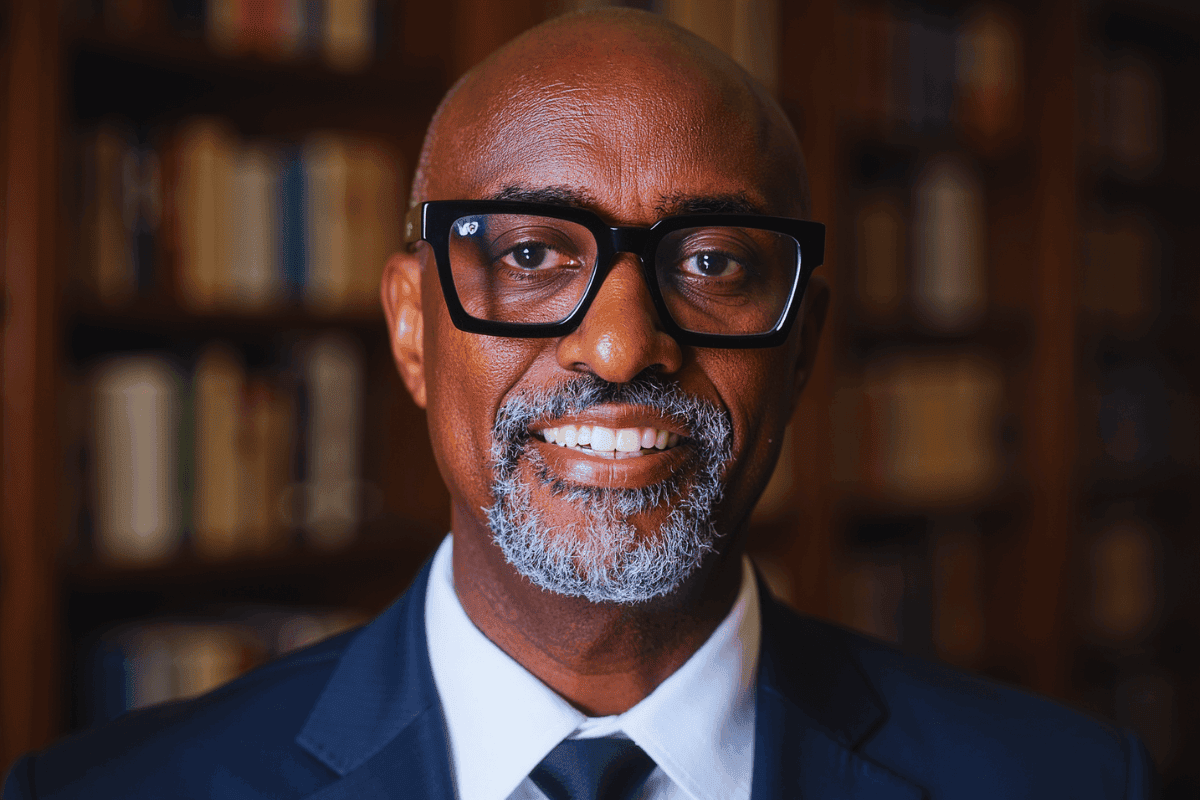
Peter Benson
Cognitive Enhancement Researcher | 18+ Years Independent Research
Peter has spent 18+ years testing focus and productivity interventions on himself, tracked against 26 months of continuous Oura sleep and recovery data. He grades evidence honestly and reports what fails as readily as what works.
Last reviewed: July 2026
Scientific References
- Owen, G. N., Parnell, H., De Bruin, E. A., & Rycroft, J. A. (2008). The combined effects of L-theanine and caffeine on cognitive performance and mood. Nutritional Neuroscience, 11(4), 193–198. PMID 18681988
- Haskell, C. F., Kennedy, D. O., Milne, A. L., Wesnes, K. A., & Scholey, A. B. (2008). The effects of L-theanine, caffeine and their combination on cognition and mood. Biological Psychology, 77(2), 113–122. PMID 18006208
- Wittbrodt, M. T., & Millard-Stafford, M. (2018). Dehydration impairs cognitive performance: a meta-analysis. Medicine & Science in Sports & Exercise, 50(11), 2360–2368. PMID 29933347
- Ganio, M. S., Armstrong, L. E., Casa, D. J., et al. (2011). Mild dehydration impairs cognitive performance and mood of men. British Journal of Nutrition, 106(10), 1535–1543. PMID 21736786
- Van Dongen, H. P. A., Maislin, G., Mullington, J. M., & Dinges, D. F. (2003). The cumulative cost of additional wakefulness: dose-response effects on neurobehavioral functions and sleep physiology from chronic sleep restriction and total sleep deprivation. Sleep, 26(2), 117–126. PMID 12683469
- Olsson, E. M., von Schéele, B., & Panossian, A. G. (2009). A randomised, double-blind, placebo-controlled, parallel-group study of the standardised extract SHR-5 of the roots of Rhodiola rosea in the treatment of subjects with stress-related fatigue. Planta Medica, 75(2), 105–112. PMID 19016404
- Cleveland Clinic. How to get caffeine out of your system (caffeine half-life). Cleveland Clinic Health Essentials. health.clevelandclinic.org